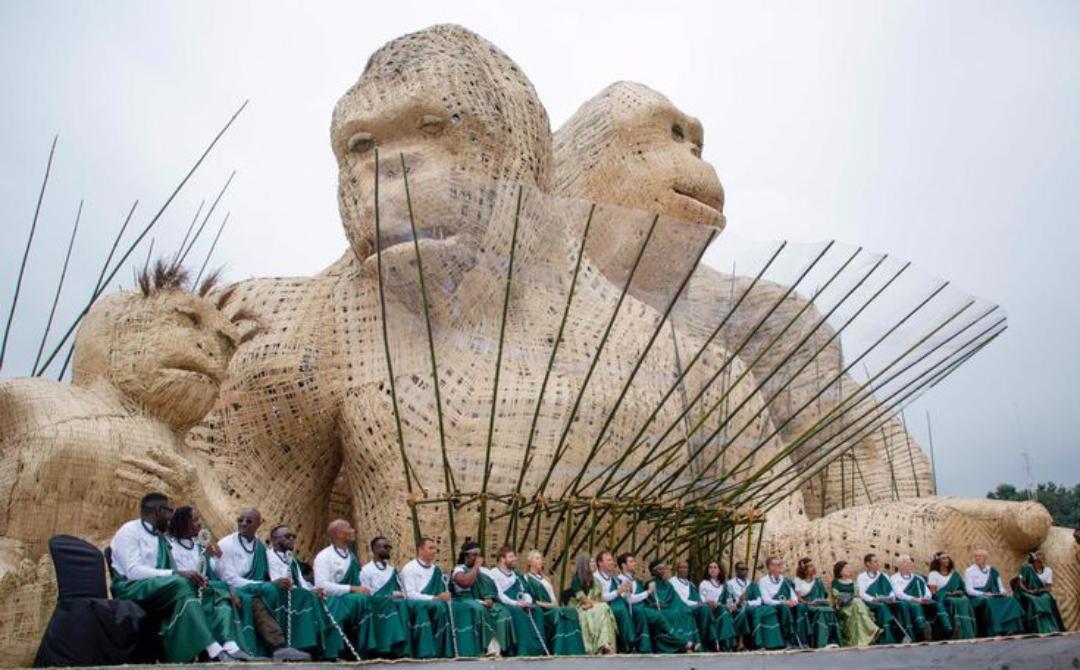
A New Generation of Mountain Gorillas Receives Its Names. Kwita Izina 2026: Rwanda Gorilla Naming…
Top 15 Interesting Facts about Rwanda
Interesting and Fun Facts you need to know about Rwanda
Interesting facts about Rwanda are quite a number, they range from its history to its culture Rwanda and to its rapid development since the 1994 Rwanda genocide. Rwanda is the smallest landlocked country in East Africa strategically located in the Great Lakes Region. Rwanda is bordered by Uganda, Tanzania, Burundi, and DRC. There is a lot to explore in this country that only setting foot on it can unveil it all. Nonetheless, we have assembled some interesting facts about Rwanda to help you gear up.
Others know of it because of Dian Fossey’s work there with gorillas and the film “Gorillas in the Mist”. While gorillas remain a major attraction for tourists visiting Rwanda, there is so much more to this small African nation full of wonderful people. Rwanda is full of impressive art, delicious fish, a lovely lake, and more
Fact No. 1: Rwanda is the “Land of a Thousand Hills”
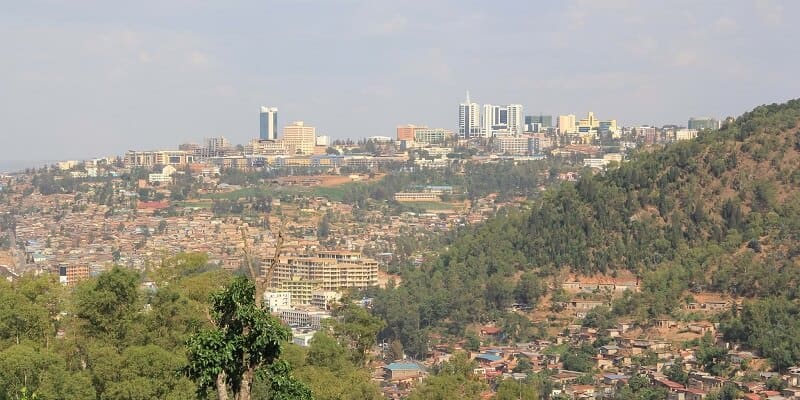
Rwanda, a landlocked nation, shares borders with Uganda, Tanzania, Burundi and the Democratic Republic of the Congo. The capital, Kigali, is just 1,107 km or 694 miles from the equator. It truly is the “Land of a Thousand Hills” with mountains and hills everywhere and towns and cities located at substantial elevations. Rwanda is also the second smallest nation in Africa and is known to be the cleanest nation in East Africa.
Fact No.2. The official language of Rwanda is Kinyarwanda.
The official language is Kinyarwanda, however, Many Rwandans also speak English, which students learn in schools. Some people still speak French. Before the 194 genocide, Rwanda was a Francophone nation, with children learning French in schools, but the government made the switch from English to French following the genocide. Its effort to teach English in schools widened in 2009.
Fact No.3. Rwanda is a major producer of coffee and tea.
The coffee I drank while I was there is some of the best I’ve ever tasted. The staple food is a fish, particularly Tilapia and Simbaza. People often prepare it fried. Both fish are from Lake Kivu, a large lake separating parts of Rwanda and the Democratic Republic of the Congo. Simbaza was a favorite of mine while in Rwanda.
Cassava is another staple food item, similar to spinach or collard greens. People in the United States know cassava as the tapioca plant which is the main ingredient in tapioca pudding. Leaves must be cooked to be eaten. Otherwise, they are poisonous.
Other popular food items are samosas, brochette (skewered meat similar to kebabs), and chapatti — a traditional Kenyan fried bread that is thin and round. Local raise goats throughout the country and some restaurants are beginning to serve fresh-made ricotta from goat’s milk which is delicious.
Fact No.4. Lake Kivu is Rwanda’s largest lake.
Like Kivu is dotted with islands, many of which have unique inhabitants and stories. I visited an island that appropriately called Bat Island because it is home to thousands of fruit bats (and a few cows).
Fact No.5. Rwanda is a birdwatcher’s paradise.
Of the 23 bird species in the world, Rwanda is home to seven of them (including many rare species). The Nyungwe Forest, in particular, is famous for its diverse beauty and number of birds.
Dian Fossey made Rwanda famous with her studies of the gorillas living there. The Rwandan government recently raised the permit fees for gorilla trekking in Volcano National Park. The cost is now $1,500 per day, which might seem quite high to many, but the increased rate is part of an effort to reduce the human footprint on the gorilla’s habitat and to improve conversation efforts.
Recently, the Ellen Degeneres Wildlife Fund was established to continue the important conservation work of Dian Fossey. Ellen and her wife Portia de Rossi visited Rwanda in 2018 to begin the fund which includes a permanent home for the Dian Fossey Gorilla Fund.
Fact No.6. Rwanda hosts a car-free day to promote exercise and healthy living.
In Kigali, the capital of Rwanda, there are various car-free zones where pedestrians and cyclists can roam freely. Rwanda also implements a car-free day each month in which the government encourages residents to exercise and focus on healthy living. While cars are popular in Rwanda, many people travel on foot, bicycles, moto-taxis, and mopeds on which individuals ride on the back of to get around. Most moto-taxi drivers carry an additional helmet with them, and this is by far the most affordable way to get around in Kigali if your destination is too far for walking.
Fact No.7. Distribution of Religious Dominance in Rwanda.
The most dominant religions in Rwanda are Roman Catholic, Protestant, Adventist and Muslim. Rwanda is a largely Christian country with Roman Catholic being the dominant sect of Christianity. Protestantism is picking up to challenge this dominant Roman position. Adventism and Islam are also active in Rwanda, though practiced by a much smaller population. If you are a Christian or Muslim, you will find spiritual comfort and nourishment while on your trip to Rwanda.
Fact No.8. No plastic bags are allowed.
Tourists cannot bring plastic bags into the country, and stores do not give any out. Instead, people use paper bags or biodegradable bags made from cassava leaves or banana leaves. Many of the places I stayed reflected the nation’s commitment to reusable items.
Fact No.9. Honey and conservation are huge in Rwanda.
One of the best things to taste while in Rwanda is the delicious honey. The area surrounding Akagera National Park is the main source of the nation’s honey. A buffer zone around the park was created to discourage poaching.
Bees and honey farms were set up to replace the income previously earned through poaching. It seems to be an effective way to encourage conservation and to protect the many species inside Akagera while also supporting a sustainable livelihood for individuals in neighboring communities. I ate some delicious ice cream topped with honey at Inzozi Nziza, a cooperative ice cream and coffee shop located in Butare, Rwanda. Inzozi Nziza is the subject of the documentary Sweet Dreams.
Fact No.10. Local art is on display everywhere.
One of the favorite things about Rwanda is that many of the hotels double as galleries for local artists. These places often fill their hallways, walls and common areas with paintings made by local artists, which are also for sale. Funds support the artists and programs for local street children to receive services, education, etc. I love this idea!
Fact No.11. Monthly Community Service in the whole country.
It’s called “Umuganda” in the local language, which means “ working together”. The last Saturday of the month, each community delegates a place to meet up and do something positive to the community. Usually, activities involve cleaning up, planting out trees, building a house for the poor, infrastructure ( a local school, hospital), or something of that nature. The idea is to work together for the betterment of the community and the Rwandan society at large.
Fact No. 12: The Karisimbi (White Shell) Volcano
The Karisimbi Volcano (4,519 m high) in the Virunga Mountains is the highest point in Rwanda. Rwanda is a highly mountainous country. Kasirimbi Volcano is the highest point. It measures 4,519 m high and is found in the Virunga Mountains. The capital city, Kigali, is established in a mountainous region.
Fact No.13. Rwanda is only one of three countries in Africa where you can visit Mountain Gorillas in the Wild.
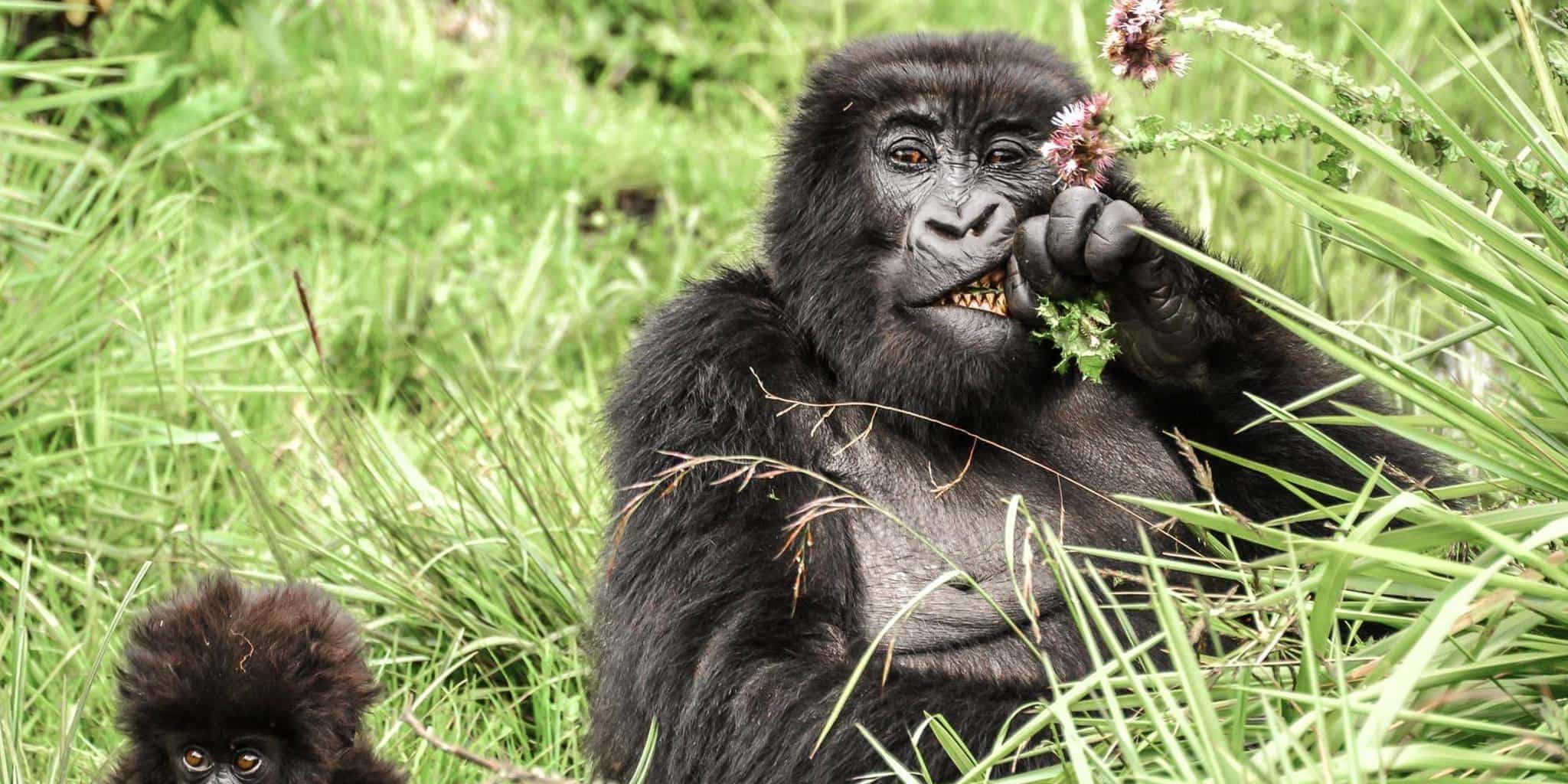
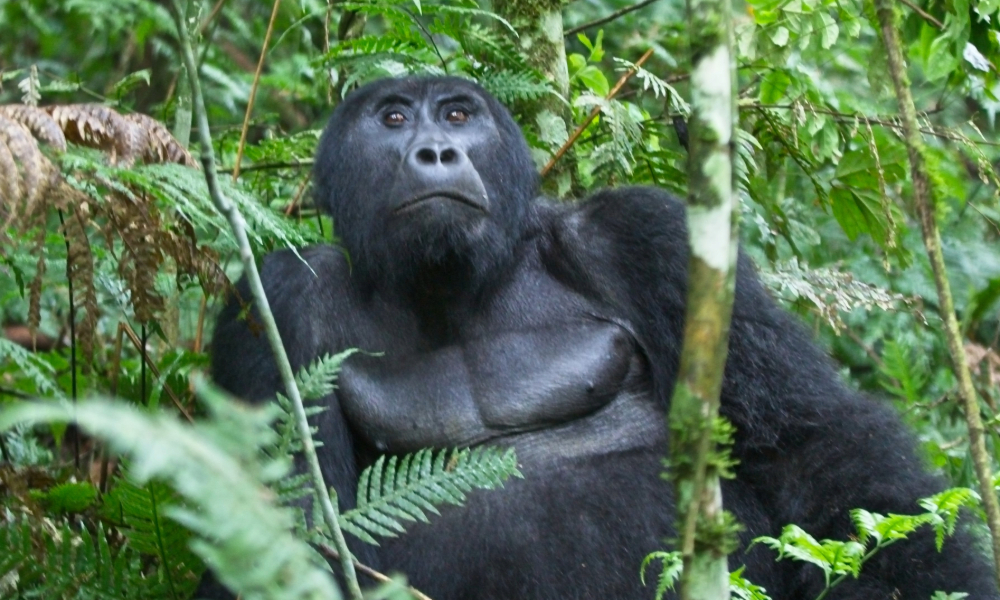
Gorillas are the most common apes in the central African region, which encompasses the western part of Rwanda. Gorilla tourism is a major activity that earns Rwanda millions of dollars. It is quite captivating to watch Gorillas in their natural habit their proud movement, their game, their domineering voice, among others. The good thing is that they are not caged but free.
Fact No.14. Rwanda’s Parliament has more female members than any other parliament in the world.
Rwanda is among the few countries in the world where the representation of women in Parliament supersedes that of men. It surpasses that of Scandinavian countries, Iceland and New Zealand – countries are known to have high gender parity ratio. In fact, women comprise almost 64% of the members of Parliament – surpassing men by a huge margin. This has contributed to increased gender parity in other spheres of life such as health, education, and trade. It has also led to a country that is more peaceful with improved overall human development. This is because unlike men, women are more adept at initiating peace-friendly policies and legislation.
Fact No.15. No Flip-Flop Sandals allowed in Rwanda.
You are not allowed to wear flip-flop sandals while walking in public places in Rwanda. Being open, this is considered unhygienic, as flip-flops do not cover the vulnerable parts of your feet. It is also thought that flip-flops easily picks up and spread germ-infested dirt onto other people’s feet, especially if they are behind you. The grand policy is – hygiene first.
Related Posts